care2 min read
On this page
What Actually Damages Bedroom Furniture in Karachi (And What Doesn't)
Most furniture damage we see isn't from age. It's moisture, direct sun, and a few habits people don't think twice about. Here's what actually matters.
Yousuf Living·20 Jul 2026
We get calls a couple of times a month from people saying their furniture "went bad" after a year or two. Almost none of it is a manufacturing problem. It's usually one of a handful of habits, and most of them are easy to fix once you know what to look for.
The real enemy is moisture, not time
An AC unit dripping onto a dresser top, a damp wall behind a wardrobe on the ground floor during monsoon, a glass of water left on a side table overnight without a coaster. That's what actually shortens the life of a piece, not normal daily use. MDF is worse off here than solid wood. Once it swells from standing water, it doesn't sand back and recover the way timber can.
If you mop near furniture, keep the legs dry afterward instead of letting the water sit and evaporate against the wood.
Sun fades things faster than people expect
A piece sitting half in direct sunlight through a window will fade unevenly, usually within a year or two, not decades. Polish dulls first, laminate holds up a bit longer. If you can't move the piece out of the light, a curtain during peak afternoon hours does more than any polish or spray.
Cleaning habits that actually help
50% advance · balance on deliveryCustom sizing free · Karachi delivery
WhatsApp us A dry or barely damp cloth is enough for most day-to-day cleaning. Skip ammonia-based sprays on polished surfaces, they strip the finish faster than they clean it. For upholstered headboards, a vacuum with a brush attachment once a week keeps dust from working into the fabric.
Hardware wears out before the wood does
Hinges and drawer channels loosen with use. Check the screws every few months and tighten what's moved. If a drawer starts sticking during monsoon, that's usually humidity swelling the wood slightly, not damage. It eases up on its own once the weather dries out. Forcing it is what actually causes damage.
When it's worth calling someone
Deep scratches on polish, water rings that won't wipe off, a joint that's gone wobbly. A workshop touch-up for any of these is almost always cheaper than people assume, and cheaper than replacing the piece. We do this kind of repair work too, not just new orders.
Got a piece that needs a look? Message us on WhatsApp with a photo and we'll tell you honestly whether it's worth fixing.
Common questions
Can water really ruin MDF furniture?
Yes, if it's left standing. Wipe up spills right away — standing water is the main cause of MDF swelling, and unlike solid wood, it doesn't sand back once it's swollen.
How often should I polish solid wood furniture?
A light wax or polish every month or so keeps the surface sealed, especially in humid weather. MDF pieces need it less for protection, more just for looks.
Does direct sunlight actually damage furniture?
Yes. A piece sitting half in direct sunlight fades unevenly, often within a year or two, not decades. Polish dulls first, laminate holds up a bit longer. A curtain during peak afternoon hours helps more than any spray or polish.
What's the safest way to clean furniture day to day?
A dry or barely damp cloth is enough for most cleaning. Skip ammonia-based sprays on polished surfaces, they strip the finish faster than they clean it.
Why does my wardrobe drawer stick during monsoon?
Humidity swells the wood slightly in wet weather. It eases up on its own once things dry out. Forcing a sticking drawer is what actually causes damage, not the swelling itself.
How often should I check hinges and drawer hardware?
Every few months. Tighten whatever's loosened, since hardware tends to wear out before the wood itself does.
You might also like
materials1 min read
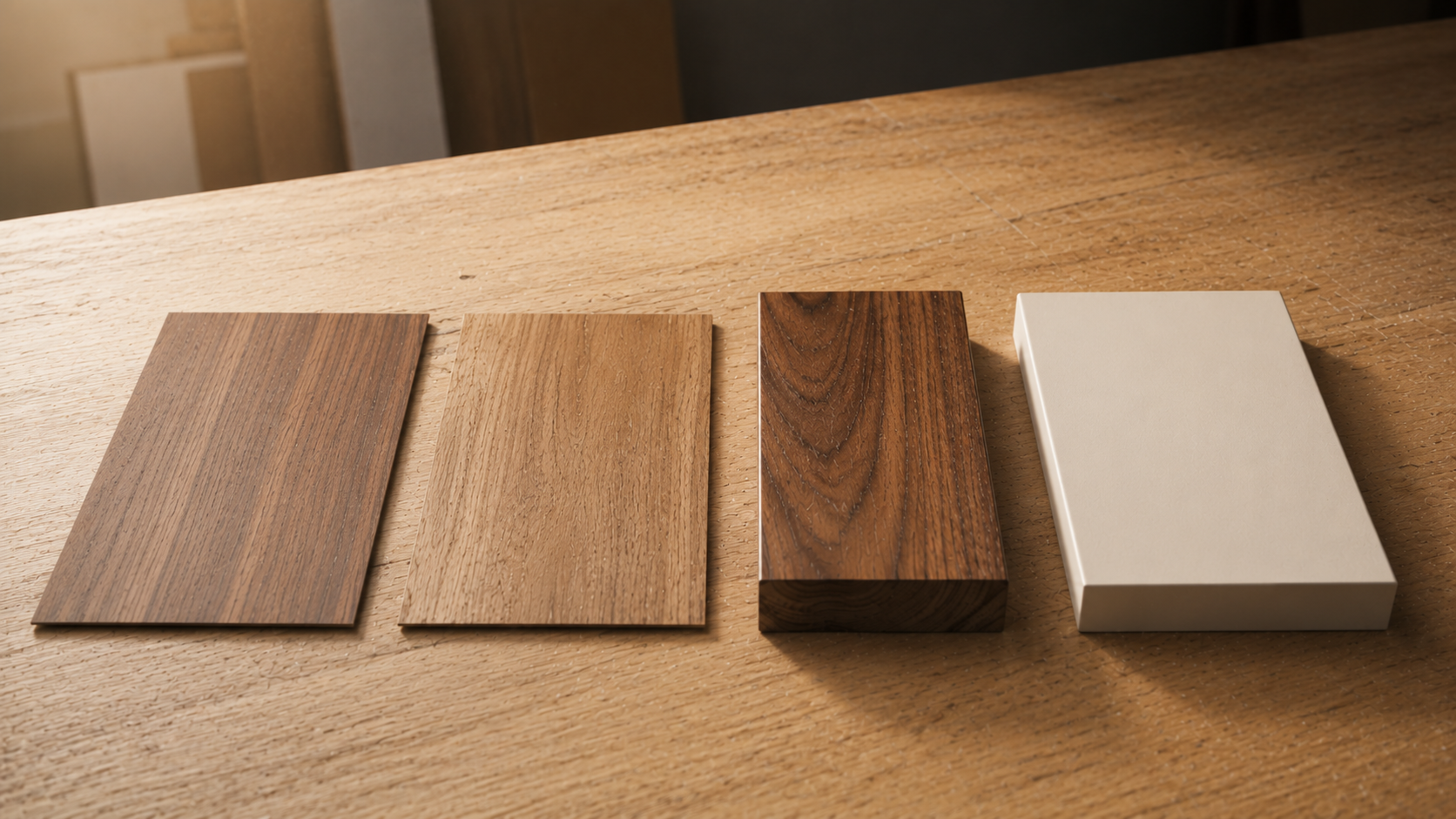
Laminate, Veneer, Solid Wood Polish, and MDF Deco: What's the Actual Difference?
Four finishes get mentioned constantly in showrooms and mixed up just as often. Here's what each one actually is, and which fits which kind of room.
22 Jul 2026Read more
materials1 min read